




Outdoor stairs are one of the most overlooked structural elements on a property—until they start to fail. By the time cracks appear, wood begins to rot, or steps become uneven and unsafe, the problem is no longer cosmetic. It becomes a safety issue, a liability risk, and often a recurring expense that property owners find themselves dealing with again and again.
Understanding why outdoor stairs fail in the first place is the key to breaking that cycle. More importantly, choosing the right replacement solution can mean the difference between a short-term fix and a decades-long investment.
Most exterior stair systems fail for the same underlying reasons: exposure, inconsistency, and material limitations. Outdoor stairs live in a constant state of stress. They expand and contract with temperature swings, absorb moisture during wet seasons, and endure freeze-thaw cycles that gradually weaken their structure. Over time, even well-built stairs begin to deteriorate under these conditions.
Wood stairs tend to fail the fastest. While they may offer a lower upfront cost and a familiar look, they are highly vulnerable to moisture. Water seeps into the grain, leading to rot, warping, and eventual structural instability. Even pressure-treated lumber is not immune. Within a few years—sometimes sooner in harsher climates—boards begin to soften, fasteners loosen, and the entire system becomes less reliable.
Poured concrete stairs are often seen as a more durable alternative, but they come with their own set of problems. Because they are formed and cured on-site, their quality depends heavily on conditions during installation. Variations in temperature, improper curing, or inconsistencies in the mix can all lead to premature cracking. Once cracks form, water finds its way in, freezes, expands, and accelerates the breakdown. Over time, what was once a solid structure becomes uneven, chipped, and potentially hazardous.
Another common issue across both wood and traditional concrete systems is inconsistency. Slight variations in riser height or tread depth may not seem significant during construction, but they can create real safety concerns. Uneven steps are one of the leading causes of trips and falls, especially in high-traffic areas like apartment complexes, commercial buildings, and public access points.
These failures are not just structural—they are financial. Property owners often find themselves caught in a loop of ongoing repairs: replacing boards, patching cracks, repainting surfaces, and addressing safety complaints. Each fix may seem manageable on its own, but over time, the cumulative cost becomes substantial. More importantly, these repeated interventions never fully solve the root problem.
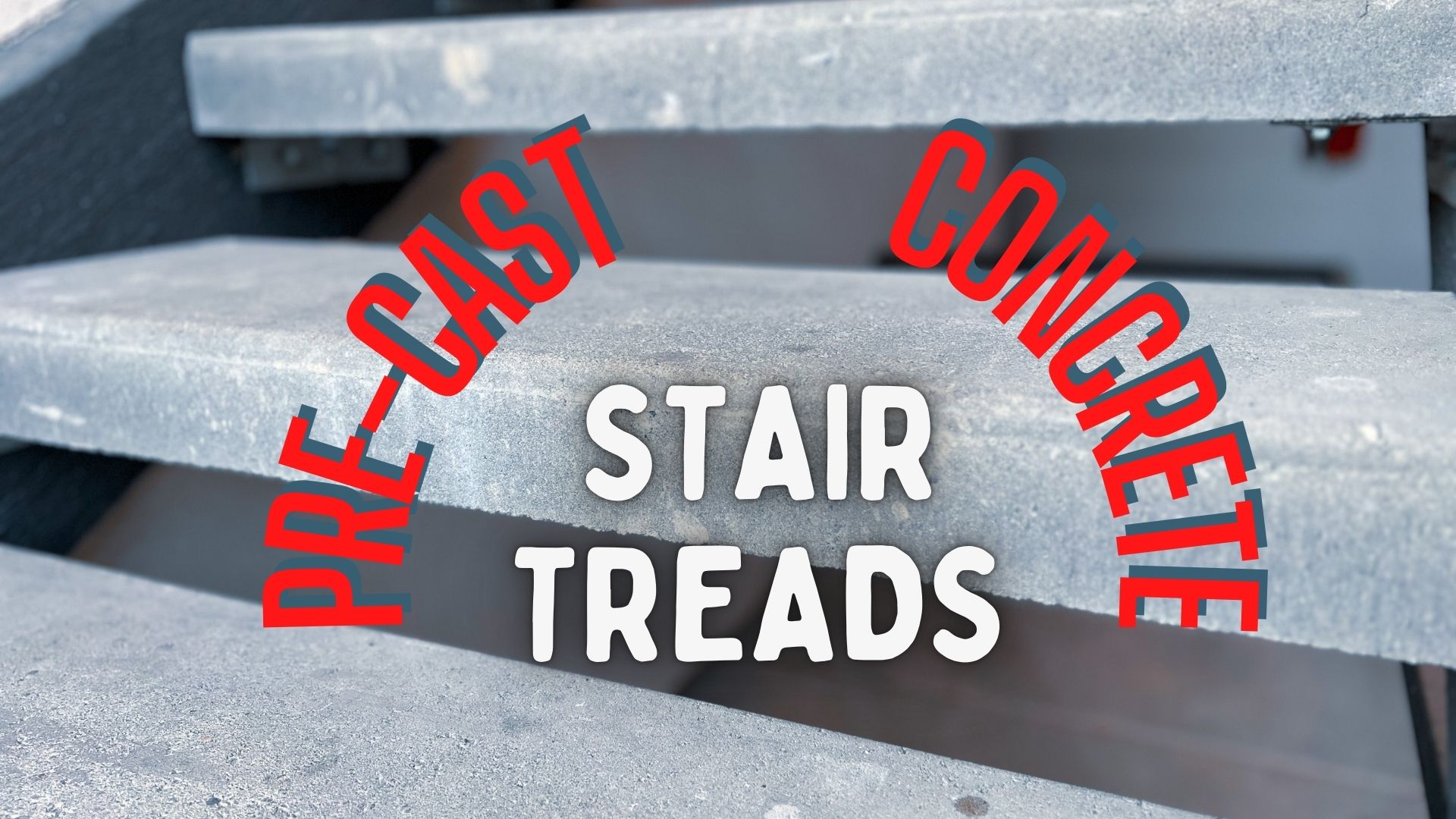
This is where precast concrete stair treads offer a fundamentally different approach.
Unlike wood or poured-in-place systems, precast concrete is manufactured in a controlled environment. Each tread is produced using consistent materials, precise molds, and standardized curing processes. This eliminates many of the variables that lead to early failure in traditional construction. The result is a product that is uniform, dense, and engineered specifically to withstand long-term outdoor exposure.
One of the most significant advantages of precast concrete is its resistance to moisture and temperature extremes. Because of its density and controlled production, it absorbs far less water than traditional concrete. This dramatically reduces the impact of freeze-thaw cycles, which are one of the primary causes of cracking and surface degradation. Instead of breaking down over time, precast treads maintain their integrity year after year.
Durability alone, however, is only part of the equation. Precast systems also address the issue of consistency. Each tread is manufactured to exact specifications, ensuring uniform riser heights and tread depths across the entire staircase. This level of precision not only improves the appearance of the stairs but also significantly enhances safety. For property managers and building owners, this can translate into reduced liability and fewer maintenance concerns.
Installation is another area where precast concrete changes the equation. Traditional poured concrete requires forming, curing, and careful coordination with weather conditions. Wood construction, while faster, still involves cutting, fitting, and ongoing adjustments. Precast treads, by contrast, arrive ready to install. This reduces labor time, minimizes disruption, and allows projects to be completed more efficiently. In many cases, existing stair structures can be retrofitted rather than fully replaced, further reducing costs and timelines.
Over the long term, the financial benefits become even clearer. While precast concrete may have a higher upfront cost than wood, it eliminates many of the recurring expenses associated with maintenance and repair. There is no need for regular sealing, painting, or board replacement. The structure remains stable, the surface remains intact, and the need for ongoing intervention is dramatically reduced.
Safety is another critical factor that often gets overlooked until it becomes a problem. Outdoor stairs are exposed to rain, ice, and general wear, all of which can create slippery conditions. Precast concrete treads can be manufactured with slip-resistant surfaces, providing better traction in all weather conditions. This is particularly important for commercial properties and multi-family housing, where foot traffic is high and the consequences of a fall can be significant.
Ultimately, the failure of outdoor stairs is rarely due to a single catastrophic event. It is the result of gradual wear, environmental stress, and material limitations that compound over time. Choosing a replacement solution that addresses these factors at their core is the only way to avoid repeating the same cycle.
Precast concrete stair treads do exactly that. They offer a combination of durability, consistency, and efficiency that traditional materials struggle to match. Instead of managing ongoing repairs and unpredictable performance, property owners can install a system designed to last for decades with minimal intervention.
For contractors, this means fewer callbacks and more predictable project outcomes. For property managers, it means reduced maintenance costs and improved safety. And for homeowners, it means peace of mind knowing that the problem has been solved—not just patched.
If your outdoor stairs are showing signs of failure, it is worth taking a step back and looking beyond short-term fixes. The real opportunity is not just to repair what is broken, but to replace it with a solution that will hold up over time. Precast concrete offers that opportunity, and for many projects, it represents the most practical and cost-effective path forward.