



How Do I Measure for My New Stair Treads? A Step-by-Step Homeowner and Builder Guide
Accurate measurements are the foundation of safe, long-lasting stair treads. Whether you’re installing new exterior concrete treads, replacing worn interior steps, or ordering custom precast units, measuring correctly prevents costly mistakes, delays, and safety issues.
This guide explains exactly how to measure for stair treads, what tools you need, which dimensions matter most, and how to handle irregular or older staircases.
Why Measuring Stair Treads Matters
Incorrect measurements can lead to:
- Uneven steps that cause trips
- Gaps along edges
- Improper nosing overhang
- Installation headaches
- Code-compliance issues
- Expensive reorders
Professional-grade stair systems rely on consistent tread depth, uniform riser height, and precise widths. Taking the time to measure carefully ensures a smoother installation and a safer final result.
Tools You’ll Need
Before you start, gather:


✔ Tape measure (steel preferred)
✔ Spirit level
✔ Carpenter’s square
✔ Straightedge or long board
✔ Notebook or phone for notes
✔ Pencil or chalk
✔ Camera (helpful for documentation)
The 5 Key Stair Tread Measurements
You’ll focus on five main dimensions:
1️⃣ Width
2️⃣ Depth (run)
3️⃣ Riser height
4️⃣ Nosing projection
5️⃣ Thickness
Let’s go through each one.
1) Measure Stair Width
Width is measured side-to-side across the step.
How to do it:
- Measure from wall to wall, skirt board to railing, or stringer to stringer
- Take measurements at the front and back of the step
- Record the smallest dimension
👉 If widths vary, use the narrowest measurement unless ordering fully custom treads.
2) Measure Tread Depth (Run)
Depth is measured front-to-back, excluding the nosing.
- Place your tape at the back edge of the tread
- Measure to the front edge
- Do not include any overhang
This is one of the most critical safety dimensions.
3) Measure Riser Height
Riser height is the vertical distance between two treads.
- Measure from the top of one tread to the top of the next
- Repeat on multiple steps
- Note the tallest and shortest values
👉 All risers should be consistent. Even small differences can cause trips—especially on older stairs.
4) Measure Nosing Projection
Nosing is the front edge that slightly overhangs the riser below.
- Measure from the riser face to the front edge of the tread
- Record the amount of overhang
- Check multiple steps for consistency
If your new treads include integrated nosings, this dimension is essential.
5) Measure Tread Thickness
Thickness matters for retrofits.
- Measure from the walking surface to the underside
- If overlaying existing stairs, calculate how new thickness affects riser height
Adding thick treads without adjusting risers can make stairs unsafe or non-compliant.
Measure Multiple Steps—Not Just One
Never rely on a single step.
Older stairs often vary due to settling or past repairs.
✔ Measure top, middle, and bottom steps
✔ Record all values
✔ Flag anything inconsistent
✔ Photograph problem areas
This information helps manufacturers or installers recommend the right solution.
Measuring for Retrofit Stair Treads
If you’re placing new treads over existing steps:
- Measure existing tread depth and width
- Note damaged edges or chips
- Record current nosing
- Calculate how new thickness changes risers
- Check clearance at doors or landings
Retrofits often require thinner custom treads or riser adjustments to stay safe.
Measuring Exterior or Concrete Stairs
Outdoor stairs add extra considerations.
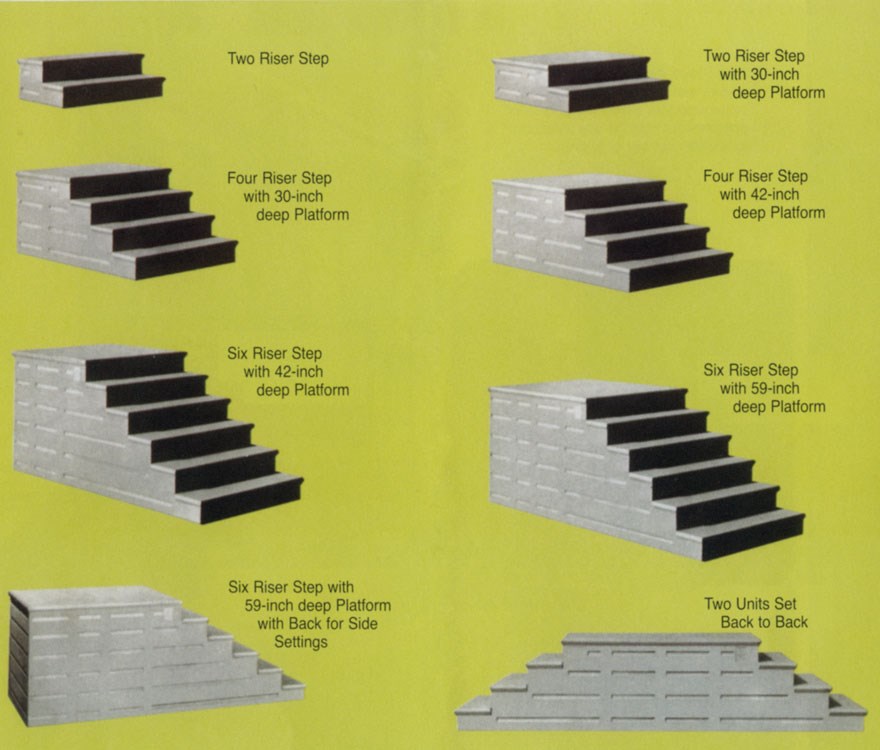
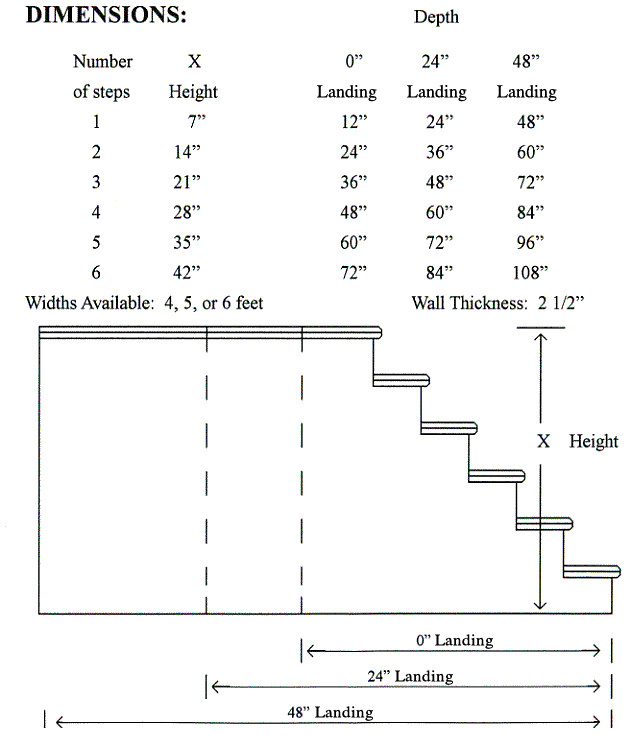


Also check:
✔ Drainage slope
✔ Cracked edges
✔ Freeze-thaw damage
✔ Landing heights
✔ Clearance for snow buildup
✔ Handrail spacing
These details affect replacement strategy and final tread design.
How to Handle Irregular or Uneven Stairs
If your measurements don’t match step-to-step:
- Write down the smallest and largest numbers
- Mark which step they belong to
- Identify structural problems
- Avoid “averaging” dimensions
- Ask about custom sizing
Custom precast or fabricated treads are often the safest solution for older staircases.
Typical Stair Tread Dimensions (General Reference)
Local building codes vary, but many stair systems use:
- Depth: 10–11 inches minimum
- Riser height: around 7–7½ inches max
- Nosing: roughly ¾–1¼ inches
- Width: full stair span
Always verify your local code before ordering.
Checklist: What to Record Before Ordering Stair Treads
✔ Stair width at multiple points
✔ Tread depth
✔ Riser heights
✔ Nosing projection
✔ Tread thickness
✔ Number of steps
✔ Landing sizes
✔ Interior or exterior location
✔ Photos of the stairway
✔ Any irregularities or damage
Having this ready speeds up quoting and prevents redesigns later.
Common Measuring Mistakes to Avoid
🚫 Measuring only one step
🚫 Forgetting nosing
🚫 Ignoring thickness
🚫 Rounding numbers
🚫 Skipping damaged areas
🚫 Assuming old stairs are uniform
Precision now saves major frustration later.
Final Thoughts: Measure Once—Build Safely
Learning how to measure for new stair treads is one of the most important steps in any staircase upgrade. Accurate dimensions ensure proper fit, code compliance, and long-term safety—whether you’re installing precast concrete treads outdoors or upgrading interior steps.
If you take thorough measurements, document inconsistencies, and plan for thickness changes, your new stair treads will install smoothly and perform for decades.